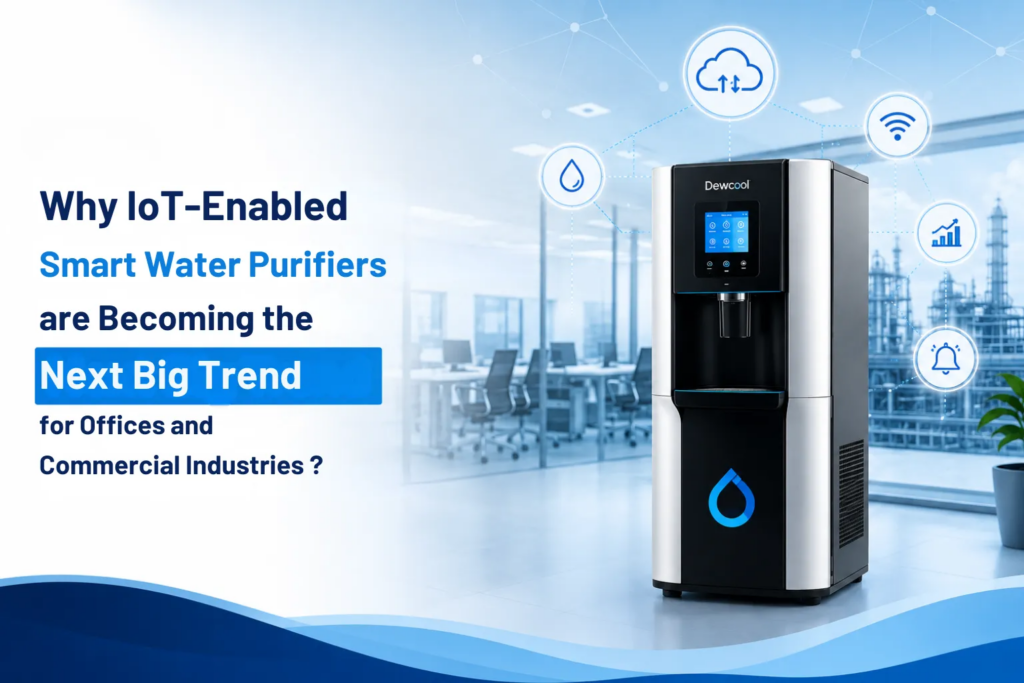
As offices and commercial industries embrace digital transformation, infrastructure decisions are no longer limited to cost and capacity. Organizations are now prioritizing intelligence, automation, and sustainability in every operational layer, including drinking water systems. This shift has accelerated the adoption of the Smart Water Purification System, positioning IoT-enabled solutions as a strategic necessity rather than a convenience.
From corporate campuses and IT parks to hospitals, hotels, and manufacturing units, the IoT water purifier is redefining how businesses manage water quality, maintenance, and compliance at scale.
The Evolving Water Challenges in Commercial Environments
Commercial spaces face unique water-related challenges. High daily consumption, variable input water quality, regulatory compliance, and dependence on uninterrupted availability make traditional purification systems increasingly inadequate. Conventional RO purifiers operate reactively; filters are replaced after failure or on fixed schedules, often resulting in downtime, water quality risks, or unnecessary maintenance costs.
A smart RO water purifier addresses these gaps by combining purification technology with IoT-enabled intelligence. These systems continuously monitor performance parameters and respond dynamically, ensuring consistent water quality even under fluctuating operating conditions.
IoT Technology Transforms Water Purification
At the core of every Smart Water Purification System is a network of sensors and cloud connectivity. These components collect real-time data on critical metrics such as Total Dissolved Solids (TDS), filter health, flow rate, pressure, and water consumption.
This data-driven approach allows facility managers to move from manual oversight to automated, predictive control. Instead of waiting for complaints or visible failures, decision-makers receive alerts and insights well before any disruption occurs. This level of transparency is particularly valuable in large offices and multi-location enterprises where centralized monitoring is essential.
Real-Time Monitoring and Remote Control
One of the most compelling reasons businesses are adopting the IoT water purifier is real-time visibility. Authorized personnel can access dashboards through web portals or mobile applications to monitor system performance remotely.
If water quality deviates from predefined standards or a component begins to degrade, instant notifications are triggered. Some systems also allow remote configuration, enabling operators to adjust purification settings without physical intervention. This capability significantly reduces response times and ensures consistent service quality across all locations.
Predictive Maintenance Improves Reliability
Unplanned downtime in commercial environments can have cascading effects on employee dissatisfaction, operational delays, and compliance risks. A smart RO water purifier mitigates these risks through predictive maintenance.
By analyzing historical and real-time data, the system can accurately estimate filter life and component wear. Maintenance is scheduled based on actual usage and performance rather than assumptions. This approach not only prevents sudden failures but also extends equipment lifespan and reduces unnecessary part replacements.
For industries operating around the clock, such reliability is a major competitive advantage.
Health, Safety, and Workplace Productivity
Employee well-being is increasingly linked to organizational performance. Access to safe, high-quality drinking water is a foundational aspect of workplace health. Inconsistent purification or contaminated water can lead to health issues, reduced productivity, and reputational damage.
A Smart Water Purification System ensures continuous compliance with water quality standards by monitoring purification efficiency in real time. Advanced systems can automatically adapt to changes in source water quality, ensuring that employees always receive clean, safe, and properly balanced drinking water.
This consistency enhances employee trust and supports broader workplace wellness initiatives.
Cost Optimization and Long-Term Savings
While the upfront cost of an IoT water purifier may be higher than traditional systems, the total cost of ownership is significantly lower over time. Automated monitoring reduces the need for routine manual inspections, while predictive maintenance minimizes emergency repairs and service disruptions.
Water wastage is another critical cost factor. Smart systems can detect leaks, abnormal consumption patterns, and inefficiencies instantly. By addressing these issues early, organizations reduce water loss and associated expenses.
Energy efficiency further contributes to cost savings, as modern smart purifiers are designed to optimize power consumption based on real-time demand.
Supporting Sustainability and ESG Goals
Sustainability is no longer optional for commercial enterprises. Regulatory pressure, investor expectations, and corporate responsibility initiatives are pushing organizations to adopt environmentally conscious technologies.
A Smart Water Purification System aligns well with Environmental, Social, and Governance (ESG) objectives. By reducing water wastage, optimizing filter replacement cycles, and eliminating dependence on bottled water, businesses can significantly lower their environmental footprint.
Additionally, detailed consumption data allows organizations to track, report, and improve water efficiency across facilities, an increasingly important metric in sustainability reporting.
Data-Driven Decision Making at Scale
Beyond purification, IoT-enabled systems provide actionable intelligence. Analytics generated by a smart RO water purifier help organizations understand usage trends, peak demand periods, and location-specific requirements.
This information supports better infrastructure planning, capacity optimization, and compliance documentation. For large enterprises, data-driven water management becomes a strategic asset rather than an operational burden.
Broad Applicability Across Industries
The versatility of the IoT water purifier makes it suitable for a wide range of commercial applications, including corporate offices, healthcare facilities, educational institutions, hospitality, retail complexes, and industrial plants. Any environment requiring reliable, high-volume access to purified water can benefit from intelligent purification systems.
The rapid adoption of IoT-enabled purification solutions reflects a broader shift toward smart infrastructure in commercial environments. With capabilities such as real-time monitoring, predictive maintenance, remote management, and advanced analytics, the Smart Water Purification System delivers measurable operational, financial, and sustainability benefits.As organizations continue to prioritize efficiency, employee well-being, and environmental responsibility, the smart RO water purifier is emerging as a critical component of modern commercial facilities. The trend is clear: intelligent water purification is not just the future; it is becoming the standard for offices and commercial industries worldwide.