Choosing a workplace water cooler is not simply about finding a machine that delivers cold water. The right system needs to match your number of employees, daily water consumption, available space, cooling requirements, water quality and maintenance needs.
For offices in Mumbai, where temperatures can remain high for much of the year, having a dependable cold water cooler can make a noticeable difference to everyday workplace convenience. But with different capacities and configurations available, how do you know which one is right for your office?
This guide explains the key factors to consider before investing in a workplace water cooler.
1. Start With Your Workplace's Daily Water Demand
The first question to ask is: How much drinking water does your workplace actually need?
A 20-litre system may be suitable for a small office, while a larger workplace with several departments, shifts or high visitor traffic may require substantially more cooling and storage capacity.
Consider:
- Number of employees using the cooler
- Number of working shifts
- Daily visitor or customer traffic
- Peak usage periods
- Whether the cooler will serve one floor or multiple areas
- Availability of an alternative drinking-water source
For example, an office with 30–40 employees may have very different requirements from a factory with hundreds of workers. Buying based only on the number of people, without considering usage patterns, can result in insufficient cooling during busy periods.
2. Understand Cooling Capacity vs Storage Capacity
One of the most important factors when comparing water coolers for office use is understanding the difference between cooling capacity and storage capacity.
Cooling capacity refers to how much water the refrigeration system can cool over a given period, while storage capacity refers to the amount of water held in the tank.
These are not interchangeable.
A cooler with a larger storage tank is not automatically the best choice if the refrigeration system cannot keep up with demand. Similarly, a high cooling capacity may not be necessary for a small workplace with limited consumption.
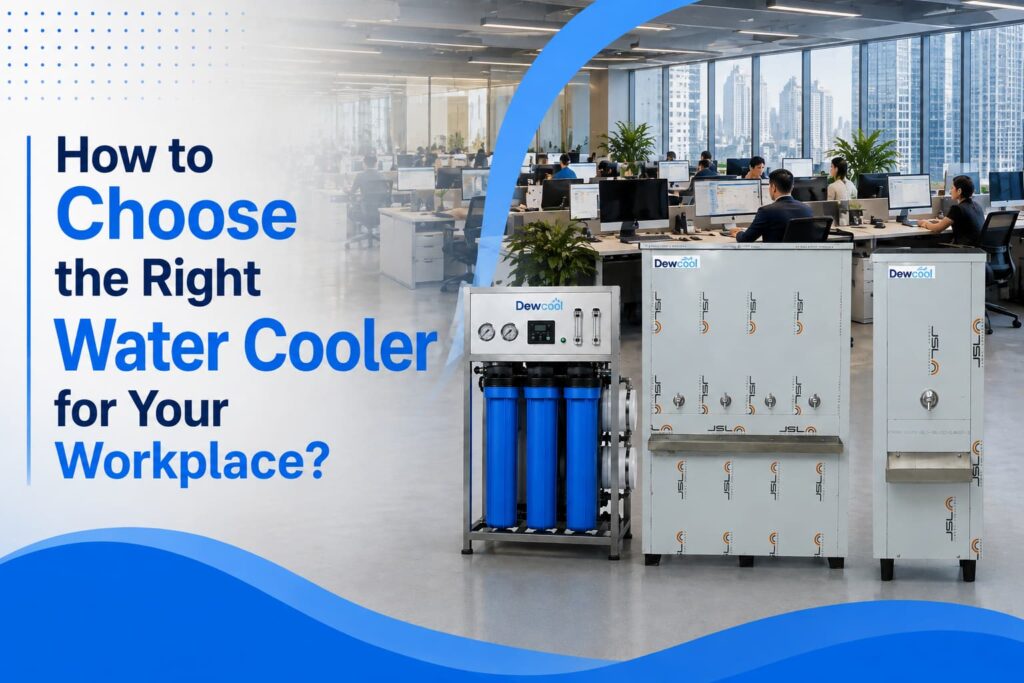
Dewcool’s Cold Water Series, for example, includes models ranging from compact 20-litre cooling/storage configurations to larger industrial options, giving businesses flexibility based on their requirements.
3. Choose the Right Capacity for Your Office
There is no universal capacity that works for every workplace. A practical approach is to assess your peak-hour demand, rather than just average daily consumption.
As a general starting point:
- Small offices: Compact cooling and storage configurations may be sufficient.
- Medium-sized offices: Look for higher storage and cooling capacity to handle simultaneous demand.
- Large offices, factoriesand institutions: Consider a high capacity water cooler designed for continuous or heavy usage.
- Multi-shift workplaces: Prioritise strong cooling performance and adequate recovery capacity.
Dewcool offers multiple models in its Cold Water Series, including WC2020FSS, WC2040FSS, WC4080FSS, WC6080FSS, WC60120FSS, WC60150FSS, WC150150FSS and WC150400FSS.
The important point is not to buy the largest unit available. Choose a capacity that matches actual usage while leaving reasonable room for peak demand.
4. Consider Water Quality Separately From Cooling
A water cooler’s primary job is to cool water. It should not automatically be assumed that cooling makes water safe to drink.
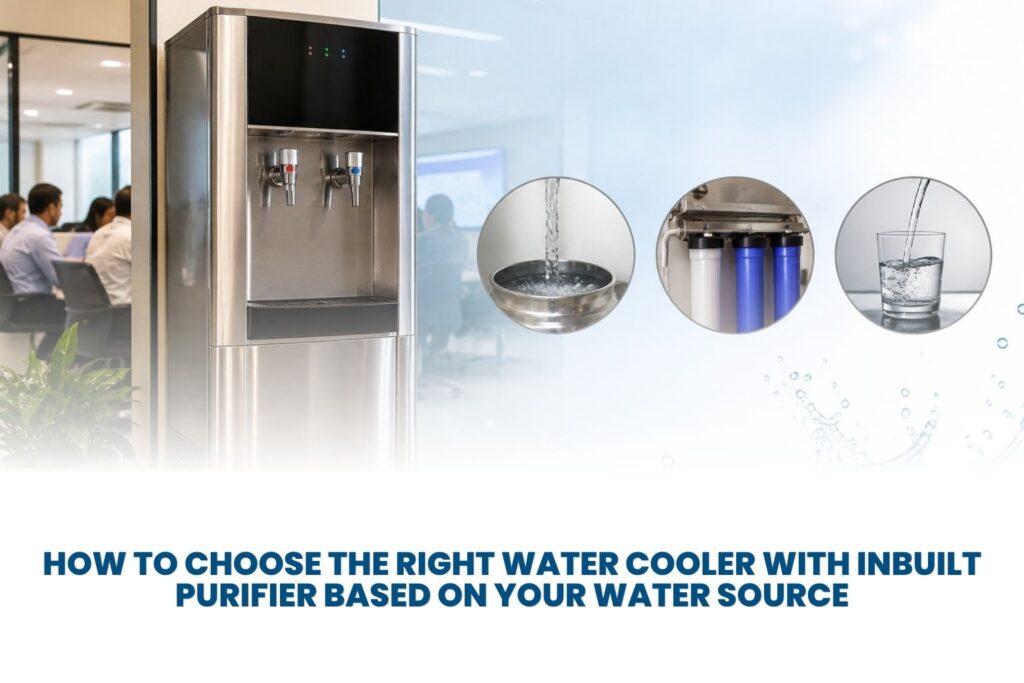
If your incoming water requires treatment, you may need a water purifier or RO system alongside the cooler.
This distinction matters because drinking-water safety depends on the quality of the source and the treatment process. The World Health Organization recommends a preventive, risk-based approach to managing drinking-water safety rather than relying on a single point of treatment.
For workplaces with challenging source-water conditions, businesses can consider an integrated purification and cooling solution. Dewcool also offers commercial and industrial water purification systems alongside its water cooler range.
5. Look for Hygienic, Durable Construction
A workplace water cooler can be used dozens or even hundreds of times every day. Material quality therefore matters.
Look for features such as:
- Food-grade stainless-steel water tanks
- Corrosion-resistant construction
- Easy-to-clean dispensing areas
- Robust external body construction
- Reliable refrigeration components
- Accessible service points
Dewcool’s Cold Water Series uses a stainless-steel body and food-grade stainless-steel tank, with the range designed for offices, factories, hospitals, schools and public spaces.
This is particularly relevant in Mumbai’s humid coastal environment, where durability and corrosion resistance should be considered when selecting commercial equipment.
6. Don't Ignore Energy Consumption
A water cooler operates regularly throughout the working day, so electricity consumption should form part of your purchase decision.
Instead of looking only at the initial price, consider the total cost of ownership:
Purchase price + electricity + maintenance + replacement parts + downtime
An energy-efficient system may offer better long-term value even if its initial cost is higher.
Also consider where the cooler will be installed. Keeping it in a well-ventilated location, away from unnecessary heat sources and direct sunlight, can support efficient operation.
7. Think About Maintenance and After-Sales Support
A water cooler is a workplace utility. If it stops working during a hot day, employees immediately notice.
Before purchasing, ask the supplier:
- What maintenance does the cooler require?
- How frequently should it be serviced?
- Are spare parts readily available?
- What is the service response process?
- Is installation included?
- Does the supplier provide after-sales support in Mumbai?
Dewcool positions its offering as an end-to-end solution covering selection, installation, maintenance and after-sales support.
For a business, reliable service can be just as important as the specifications printed on the product sheet.
8. Decide Whether You Need a Basic Cooler or a Smart System
Technology can also influence your choice.
For a conventional office, a standard cold water cooler may be all you need. However, larger facilities may benefit from monitoring and remote-management capabilities.
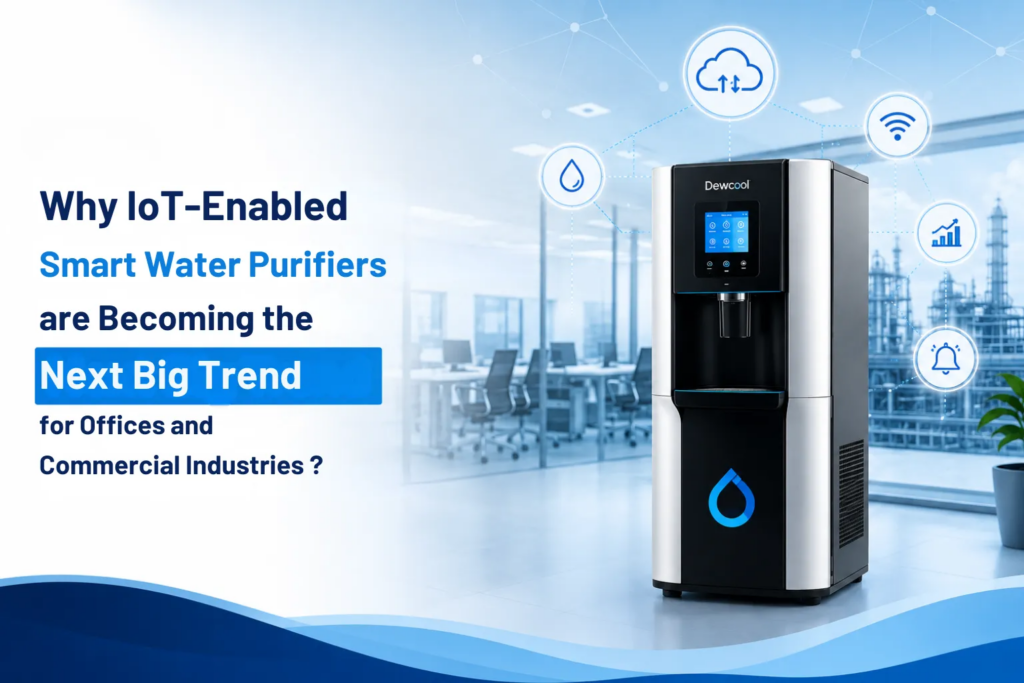
Dewcool’s Smart Water Cooler uses IoT sensors to monitor parameters including temperature, water level, flow, pressure, TDS and energy consumption. It can also provide alerts for low water levels, filter replacement and system faults.
This can be useful for businesses managing multiple locations or facilities where reducing manual monitoring and unexpected downtime is important.
A Simple Workplace Water Cooler Buying Checklist
Before finalising your purchase, check these five areas:
- Usage: How many people will use it daily?
- Capacity: What are your cooling and storage requirements?
- Water quality: Does the incoming water require purification?
- Installation: Is there sufficient space, ventilation and electrical access?
- Support: Does the supplier offer installation, servicing and after-sales assistance?
Getting these basics right will help you avoid choosing a cooler that is either underpowered for your workplace or unnecessarily large for your actual requirements.
FAQs About Choosing a Workplace Water Cooler
What size water cooler is best for an office?
The ideal size depends on employee count, consumption patterns, peak-hour demand and whether the cooler serves one or multiple areas. Small offices can consider compact models, while larger workplaces may need a high capacity water cooler.
Is a water cooler the same as a water purifier?
No. A water cooler primarily cools and dispenses water, while a purifier treats water to remove or reduce specific contaminants. If your source water requires treatment, consider a purification system together with cooling.
Should offices choose a high-capacity water cooler?
A high-capacity model makes sense when water demand is consistently high, such as in factories, large offices, hospitals, schools or other busy facilities. Smaller workplaces may not need the additional capacity.
How do I maintain a workplace water cooler?
Follow the manufacturer’s maintenance schedule, keep dispensing areas clean, inspect the system regularly and arrange professional servicing when required. If the cooler is connected to a purification system, filters and other treatment components should also be maintained according to their specifications.
What should I look for in water coolers for office use?
Prioritise cooling performance, appropriate storage capacity, hygienic construction, energy efficiency, durability, ease of maintenance and reliable after-sales service.
Final Takeaway
The best workplace water cooler is not necessarily the biggest or most expensive one. It is the system that provides enough chilled water for your actual demand, fits your workplace, works efficiently and can be maintained reliably over time.
For Mumbai offices, factories, institutions and other commercial facilities, assessing daily consumption and peak demand should be the starting point. From there, compare cooling capacity, storage, construction, energy use, purification requirements and service support.
Dewcool offers a range of commercial water cooler and purification solutions, including cold water, plain-and-cold, smart and purification-integrated options, supported by installation and after-sales services.