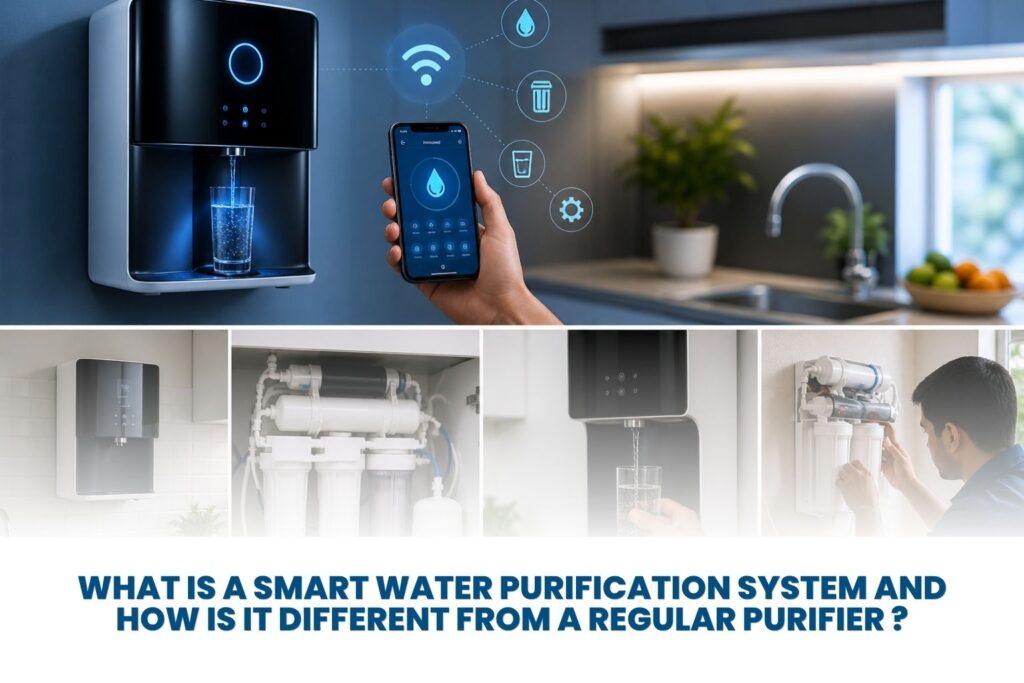
For most of us, drinking water is something we rarely think twice about; we turn on the tap or fill a glass and simply expect it to be safe. But with rising pollution and hidden contaminants, that everyday convenience increasingly depends on the technology we use at home. Over time, water purification has evolved from simple methods like boiling to advanced filtration systems, quietly becoming an essential part of daily life.
Now, as technology continues to advance, even these traditional purification methods are being upgraded. One of the latest innovations is the Smart Water Purification System. But what exactly makes it “smart,” and how is it different from a regular purifier? Let’s explore.
Understanding a Smart Water Purification System
A smart water purification system is an advanced water purification device that uses modern technologies like sensors, automation, and internet connectivity to provide safe drinking water. Unlike traditional purifiers, these systems are equipped with intelligent features that allow real-time monitoring, performance tracking, and remote control.
Most smart purifiers today are designed as an IoT water purifier, meaning they are connected to the Internet of Things (IoT). This connectivity enables users to monitor water quality, filter health, and purification status directly from their smartphones or other devices.
A smart RO water purifier (reverse osmosis-based) goes a step further by combining RO technology with smart features like automatic alerts, usage analytics, and even AI-based optimization for better performance.
Key Features of Smart Water Purifiers
Smart purification systems offer a range of advanced features that make them stand out:
1. Real-Time Water Quality Monitoring
Smart systems continuously analyze water quality using built-in sensors. They measure parameters such as Total Dissolved Solids (TDS), pH levels, and contamination levels, ensuring that the water you consume is always safe.
2. IoT Connectivity
With IoT integration, users can connect their purifier to a mobile app. This allows remote monitoring, notifications, and control, making it convenient to manage your purifier even when you are not at home.
3. Filter Life Tracking and Alerts
One of the most useful features is automatic filter tracking. The system alerts you when the filter needs replacement, eliminating guesswork and ensuring consistent purification quality.
4. Auto Shut-Off and Leak Detection
Smart purifiers can detect issues such as leaks or abnormal functioning and automatically shut down to prevent damage or water wastage.
5. Data Analytics and Usage Insights
These systems provide insights into water consumption patterns, helping users optimize usage and conserve water.
6. Voice Assistant Integration
Some high-end models support voice assistants, allowing you to control or check the purifier status using voice commands.
What is a Regular Water Purifier?
A regular water purifier typically uses basic purification technologies such as RO (Reverse Osmosis), UV (Ultraviolet), or UF (Ultrafiltration). These systems effectively remove impurities, bacteria, and harmful chemicals from water.
However, they operate in a more manual and static way. Once installed, they perform purification without providing much feedback or control to the user. Maintenance, such as filter replacement, often depends on manual checks or fixed schedules rather than actual usage or water quality.
Key Differences Between Smart and Regular Purifiers
1. Technology and Connectivity
The biggest difference lies in connectivity. A regular purifier works independently, while a Smart Water Purification System is connected to the internet and can communicate with users through apps and notifications.
2. Monitoring Capabilities
Regular purifiers do not provide real-time water quality updates. In contrast, smart purifiers continuously monitor and display water quality metrics, giving users complete transparency.
3. Maintenance and Alerts
In traditional systems, users often forget to change filters on time, which can affect water quality. Smart systems solve this problem by sending timely alerts and reminders.
4. User Convenience
Smart purifiers offer remote access, automation, and ease of use. Regular purifiers require manual operation and periodic checking.
5. Efficiency and Optimization
A smart RO water purifier can optimize its performance based on water conditions and usage patterns. Regular purifiers operate at fixed settings without adaptation.
6. Safety Features
Smart systems come with advanced safety mechanisms like leak detection and auto shut-off, which are usually absent in conventional models.
Benefits of Using a Smart Water Purification System
Choosing a smart purifier offers several advantages:
- Enhanced Safety: Continuous monitoring ensures consistently safe drinking water.
- Convenience: Remote access and automated alerts reduce manual effort.
- Cost Efficiency: Timely maintenance prevents costly repairs and improves system lifespan.
- Water Conservation: Smart systems optimize water usage and reduce wastage.
- Peace of Mind: Users can track water quality anytime, ensuring their family’s health.
Are Smart Water Purifiers Worth It?
While smart purifiers are more expensive than traditional ones, they offer significant long-term value. The added convenience, improved safety, and intelligent monitoring make them a worthwhile investment, especially in areas with inconsistent water quality.
For tech-savvy households or those who prioritize health and convenience, an IoT water purifier can be a game-changer. It not only simplifies maintenance but also provides complete control over water quality.
The evolution from regular purifiers to smart systems reflects how technology is transforming everyday appliances. A smart water purification system is not just about purifying water; it’s about doing it intelligently, efficiently, and transparently.
While regular purifiers still serve the basic purpose of cleaning water, they lack the advanced features and convenience that modern users expect. A smart RO water purifier bridges this gap by combining proven purification technologies with smart capabilities.